DÉSIRÉE

See. Select. Target.

DÉSIRÉE brings live skin imaging, point selection and 808 nm diode-laser delivery into one clinical workflow. Rather than relying only on a broad treatment spot, it lets the physician review the visible field and work with selected image coordinates. Its three operating paths address hair reduction, skin stimulation and follicle modulation.
  • Wavelength

    808 nm diode laser

  • Guidance

    Live image and selected coordinates

  • Operating paths

    Hair · Skin · Follicle
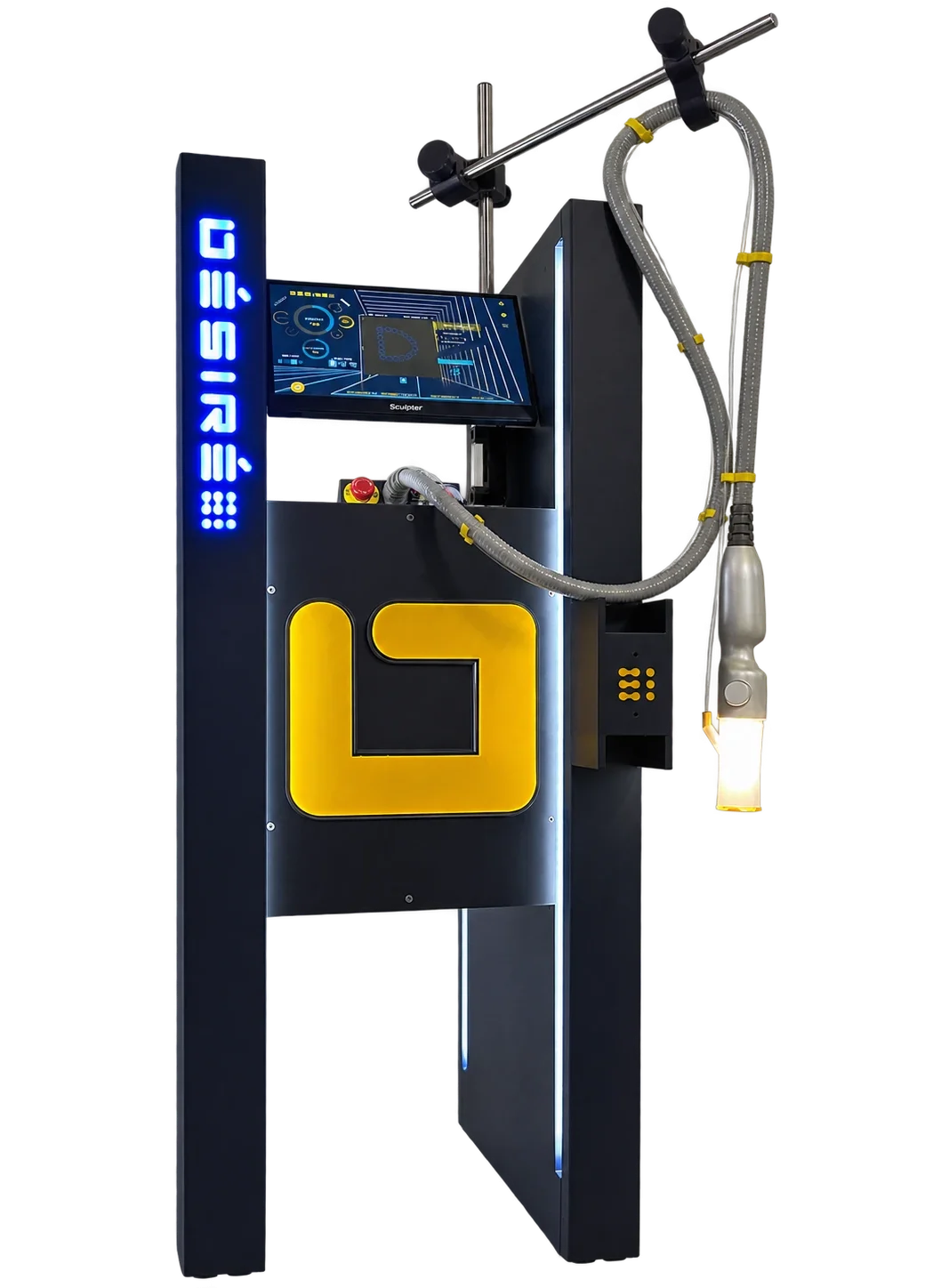
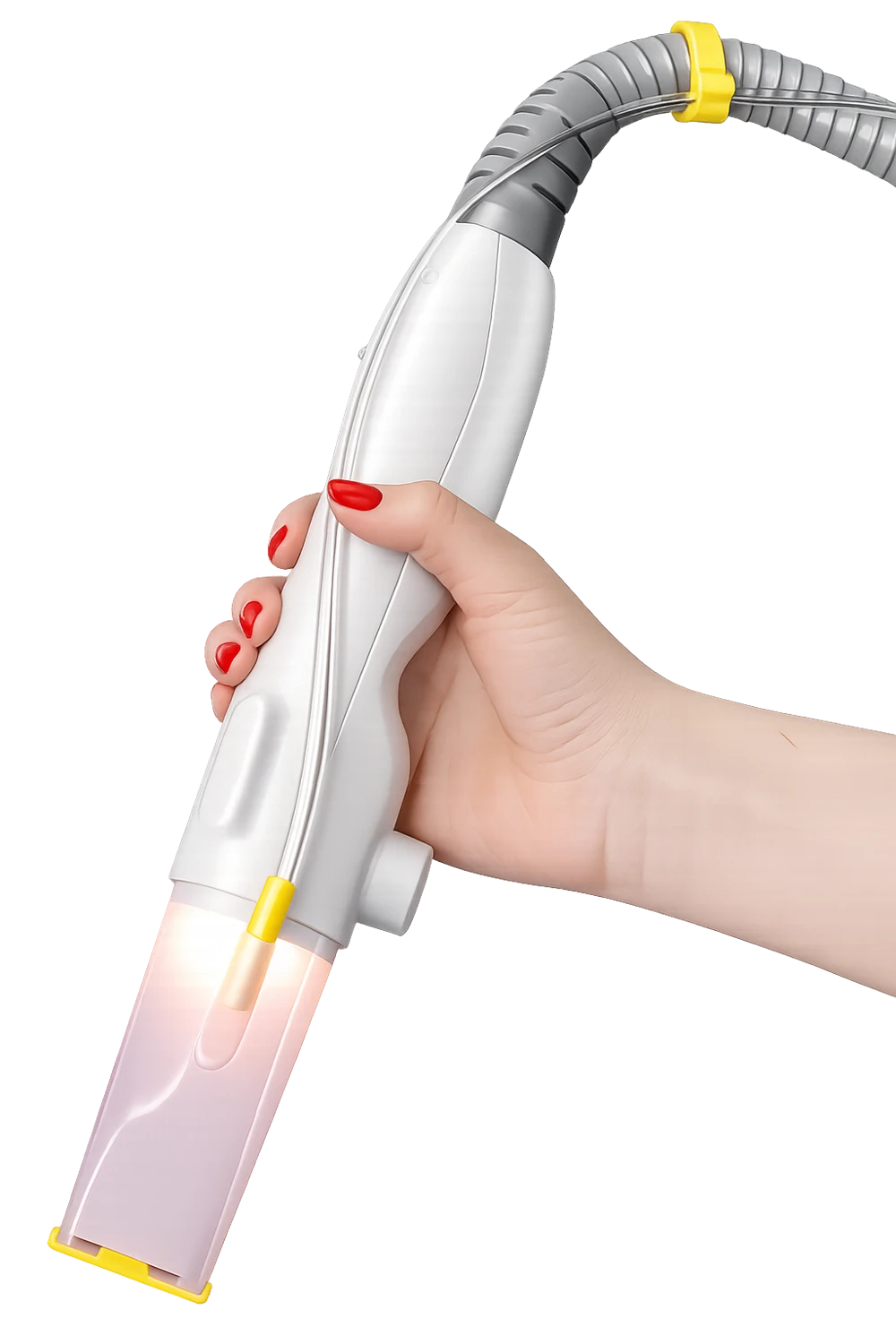
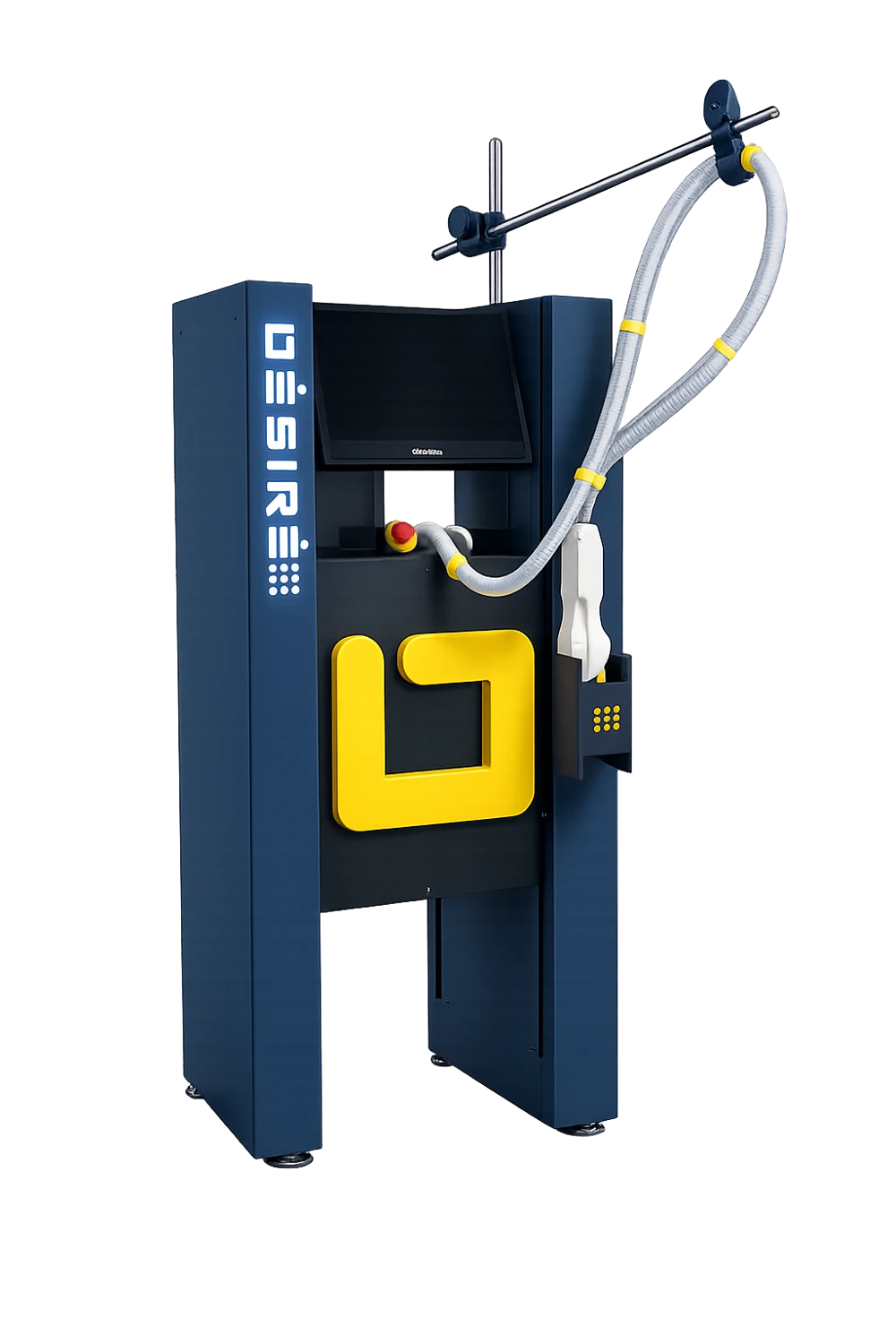
DÉSIRÉE actual device, background removed

A different way to plan laser delivery

Melanin in pigmented hair is an important absorber for an 808 nm diode laser. Effective hair reduction depends on the relationship between optical delivery, energy, pulse timing and the individual skin and hair profile. DÉSIRÉE adds image-assisted selection and calibrated beam positioning to that workflow.

In image-guided modes, software can propose locations from visible hair features and the physician remains responsible for the selection. Matrix uses a regular point grid rather than follicle detection.

From image coordinates to a selected target

This animation illustrates the targeting concept. The live camera shows surface features; it does not directly image a buried hair bulb or establish the hair-growth phase.

Hair reduction: three selection modes

Free Mode

Select or draw target points directly on the live image. Manual control supports locally planned or irregular selections.

Smart Mode

Choose 25%, 50%, 75% or 100% of the detected targets for a planned distributed selection. These values describe target coverage, not guaranteed hair reduction or identification of biologically active follicles.

Matrix Mode

Create a regular point grid at Low, Medium or High density. Density describes point spacing; it is not a standalone recommendation for a particular skin type.
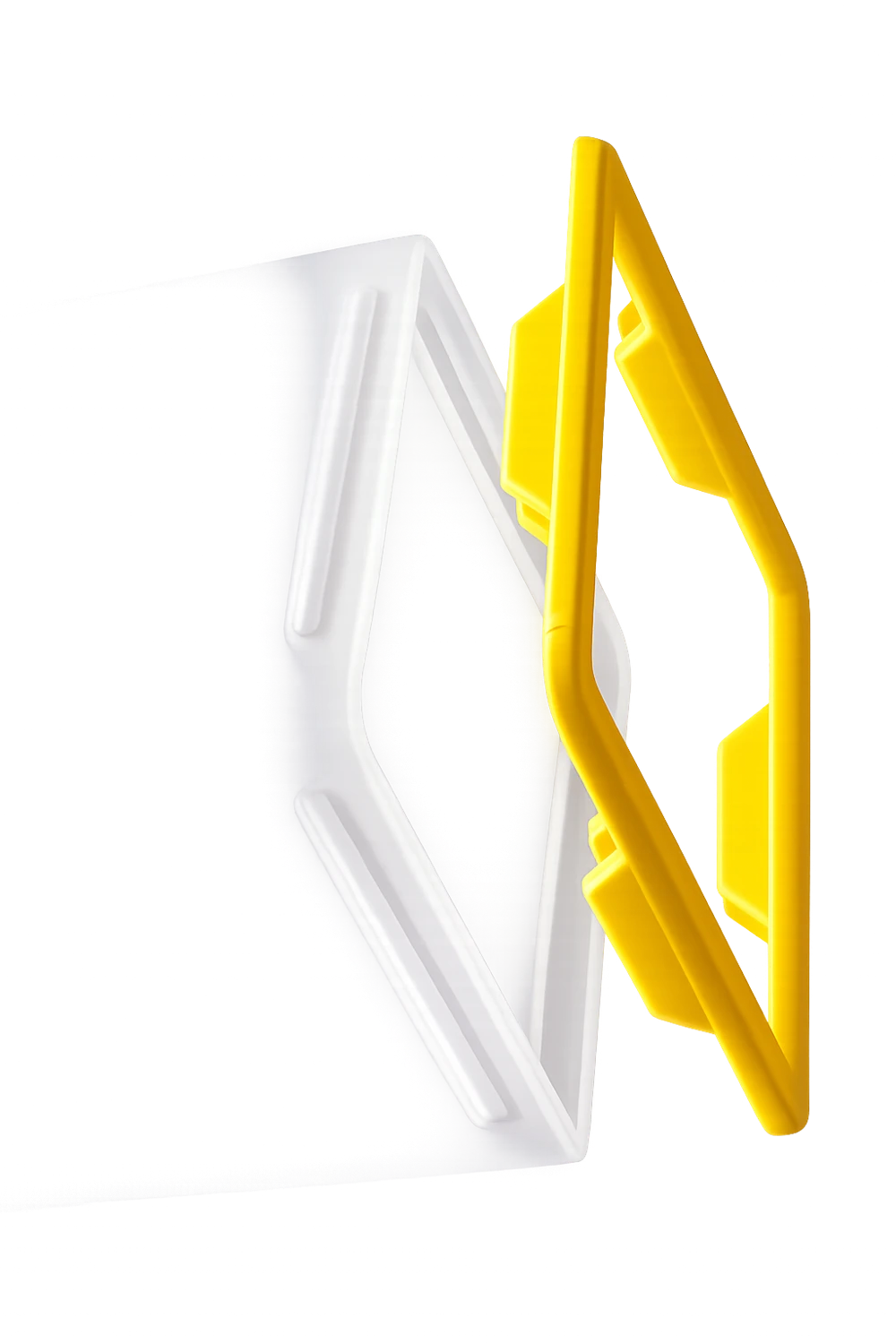
desiree-handpiece-cutout

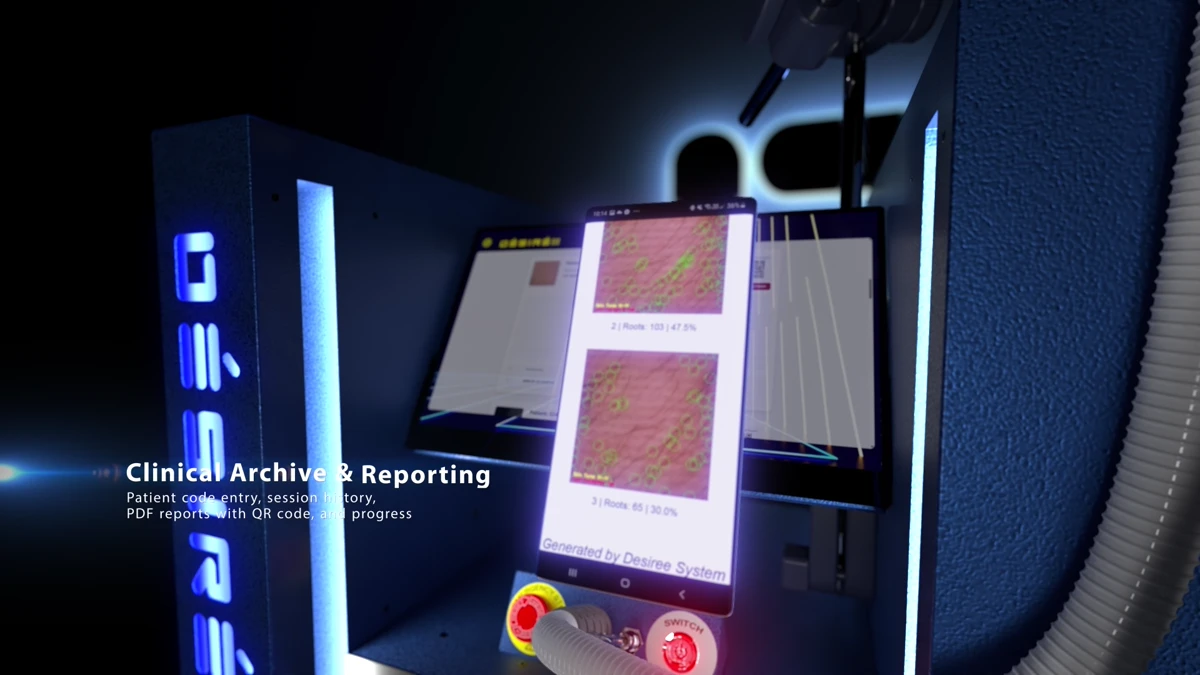
See the selection workflow

An excerpt from the supplied introduction film shows the interface and point selection. Displayed settings are part of a demonstration, not a treatment prescription.

desiree-optical-head-cutout

Target placement and pulse shape

Center / Edge / Dual

Center and Edge define target placement relative to the detected hair feature; Dual combines the selections. These are software targeting strategies rather than direct visualisation of the bulb in depth.

Uniform

A uniform pulse delivery profile.

Stacked

A sequence of shorter pulses with intervals.

Ramped

A progressively increasing pulse profile. Choosing a profile does not by itself guarantee comfort or prevent thermal injury.

Inside the optical head

An illustrative excerpt from the DÉSIRÉE introduction animation explains the optical path and beam steering. It is a mechanism visualisation, not a clinical performance test.

This operating mode is intended for a lower-energy photobiomodulation approach, with Free selection or Low/Medium/High Matrix distribution. It has a different objective and dose strategy from hair reduction. Suitability for a skin concern or use alongside another procedure requires a clinical decision and an applicable protocol.

Skin Stimulation with DÉSIRÉE

Skin Stimulation: a separate low-energy path

Follicle Modulation: select with a different objective

Follicle Modulation is presented as a lower-energy mode intended to support follicular photobiomodulation, with manual Free selection. It is distinct from the hair-reduction mode. A surface image cannot diagnose follicular disease; the cause of hair loss and the suitability of light treatment require medical assessment.

Follicle Modulation with DÉSIRÉE

From consultation to a reviewable session

Assess and prepare

Review skin and hair, history, expectations and permitted treatment areas. Set up protection and prepare the device.

Verify targeting

Perform the calibration check required by the operating instructions. If it fails, do not start treatment; follow the service procedure.

Review, select and deliver

Review the image and target map, select the operating mode and parameters, then use the authorised treatment workflow.

Record and follow up

Review recorded images and session information. Image-derived counts and indicators support documentation; they are not a diagnosis or proof of response.

Clinical archive and session reporting shown in the DESIREE introduction animation

Platform features

Platform DÉSIRÉE / AI Perfo Laser (AIPFL)
Laser wavelength 808 nm
Guidance Live skin imaging and calibrated point positioning
Hair Removal selection Free · Smart (25 / 50 / 75 / 100%) · Matrix (Low / Medium / High)
Skin Stimulation selection Free · Matrix (Low / Medium / High)
Follicle Modulation selection Free
Targeting options Center · Edge · Dual
Pulse profiles Uniform · Stacked · Ramped
Session workflow Image review, target selection, session records and reports
Use Trained clinical operators; configuration and availability follow the supplied device and current instructions
desiree-device-render

Plan treatment with clinical judgement

The physician selects the treatment area and parameters after assessing skin, hair and medical history, and provides aftercare. Laser exposure can cause redness, pain, burns, pigment changes, scarring or eye injury. Wavelength-appropriate eye protection and the device instructions are essential for everyone present. Precise targeting does not authorise treatment of the eyelids, eyebrows or surrounding eye area.

No fixed session count, permanent result, painless treatment or absence of downtime is promised. Lower-energy modes and published light-therapy research do not establish DÉSIRÉE-specific outcomes for every skin or hair disorder.

Request configuration details, training information and a product introduction from the Roxana team.

roxana.medical.co@gmail.com

Image-Guided Follicular Laser | Targeted Hair Reduction with DÉSIRÉE | Skin Stimulation with DÉSIRÉE | Follicle Modulation with DÉSIRÉE

Explore DÉSIRÉE with Roxana

Frequently asked questions

Does the camera see the buried hair root?

No. It displays visible surface features that support coordinate selection. It does not directly image the buried bulb or determine the biological growth phase.

What does Smart coverage mean?

25%, 50%, 75% and 100% describe the selected share of detected targets, not guaranteed clinical reduction.

Does Matrix detect follicles?

Matrix creates a regular point grid. It is a different selection method from image-derived follicular targets.

Are lower-energy modes the same as hair removal?

No. Their intended objectives and dose strategies differ. Clinical suitability and the current operating instructions govern their use.

Can precision targeting make treatment around the eyes safe?

Precision does not remove ocular hazards or authorise eyelid, eyebrow or surrounding-eye treatment. Eye protection and permitted treatment areas remain essential.

How are treatment parameters chosen?

A trained clinician assesses the individual and follows the device instructions. Demonstration videos and website descriptions are not treatment protocols.